AI in Radio: Opportunities, Risks and the Value of Human Voice

- Published
- Updated
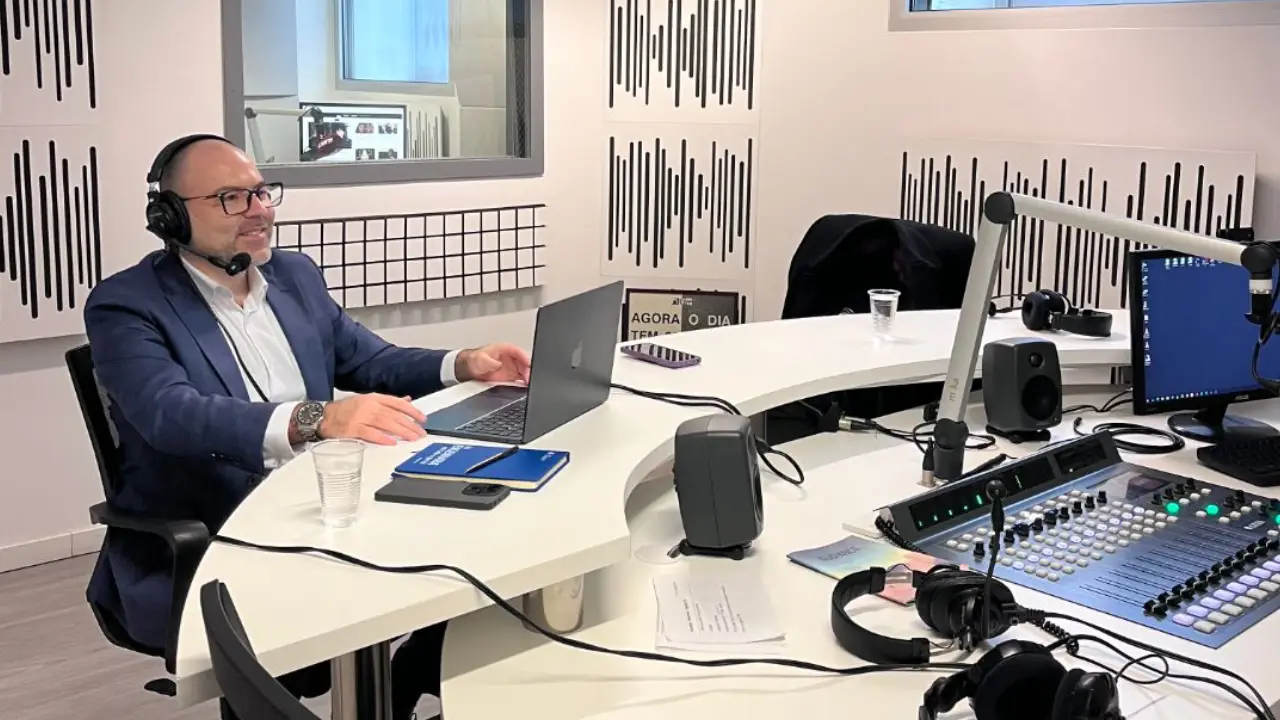
There is something particularly interesting about discussing Artificial Intelligence on the radio: a technology associated with models and data examined in a medium built on voice, presence, timing and a relationship with the listener.
I met João Rebelo during a course in which we explored ways to bring AI into daily work efficiently, creatively and safely. That training led to an invitation to join RUM – Rádio Universitária do Minho for a conversation marking World Radio Day.
How can AI support a radio newsroom?
Research and preparation
An assistant can organise questions, summarise documents and build a timeline. Editorial research still requires original sources, verification and context.
Transcription
Turning audio into text makes searching, editing, captioning and archiving easier. Names, accents, noise and overlapping voices introduce errors that must be reviewed.
Production support
AI can create a first running order, suggest titles, adapt a description for different channels or prepare notes for the presenter. Editorial selection remains with the team.
Archive organisation
Metadata, subjects, people and moments can make years of audio easier to find. This work requires consistent rules and attention to rights and personal data.
Accessibility and distribution
Transcripts, summaries and translations can bring content to people who did not hear the live broadcast. They should be identified as derived versions and compared with the original audio.
An editorial workflow with human review
Imagine preparing an interview:
- the journalist gathers sources and documents;
- AI organises themes and possible questions;
- the journalist selects, rewrites and adds context;
- the interview is recorded;
- automated transcription creates a searchable base;
- the team corrects names, quotations and important passages;
- AI helps adapt the summary and description;
- an editor approves everything before publication.
The tool reduces mechanical work, but no critical stage loses an accountable owner.
Where are the risks?
Confident errors
A plausible answer can invent facts or blend sources. In journalism, a claim should only be used after confirmation.
Synthetic voices without transparency
Cloning or generating a voice raises questions of consent, identity and trust. The audience should know when it is hearing synthetic content.
Loss of diversity
If every team accepts similar suggestions, titles, rhythms and questions become more uniform. The editorial voice needs to be protected.
Data and rights
Audio, contacts and documents may contain personal, confidential or protected information. Before uploading, assess permission, purpose and the tool's terms.
What remains deeply human?
AI can suggest questions, but it does not feel the moment to remain silent. It can summarise a story, but it does not build a relationship with the interviewee. It can imitate a voice, but it does not accept responsibility to a community.
In radio, creativity, listening, intent and trust are not details. They are the medium.
This combination of digital capability and human judgement also appears in the reflection on the professionals of the future.
For communications teams, SuperHumano AI offers training in AI for Marketing and Communication and Knowledge Base solutions. To discover and compare audio, transcription and content tools, explore SuperHumano Academy's IAteca.
Frequently asked questions
Will AI replace presenters and journalists?
It can automate parts of production and alter roles, but presence, investigation, editorial responsibility and the relationship with the audience still require people.
Is automated transcription safe?
It depends on the content and the tool. Check consent, file processing, retention, access and the need for review.
Should a radio station identify an AI-generated voice?
Yes. Transparency protects audience trust and prevents confusion around the identity and origin of the content.
It was a morning of human conversation about technology. That remains the central point: technology evolves, but conversation is what connects us.