Tech Business Summit 2025: Practical AI for SMEs

- Published
- Updated
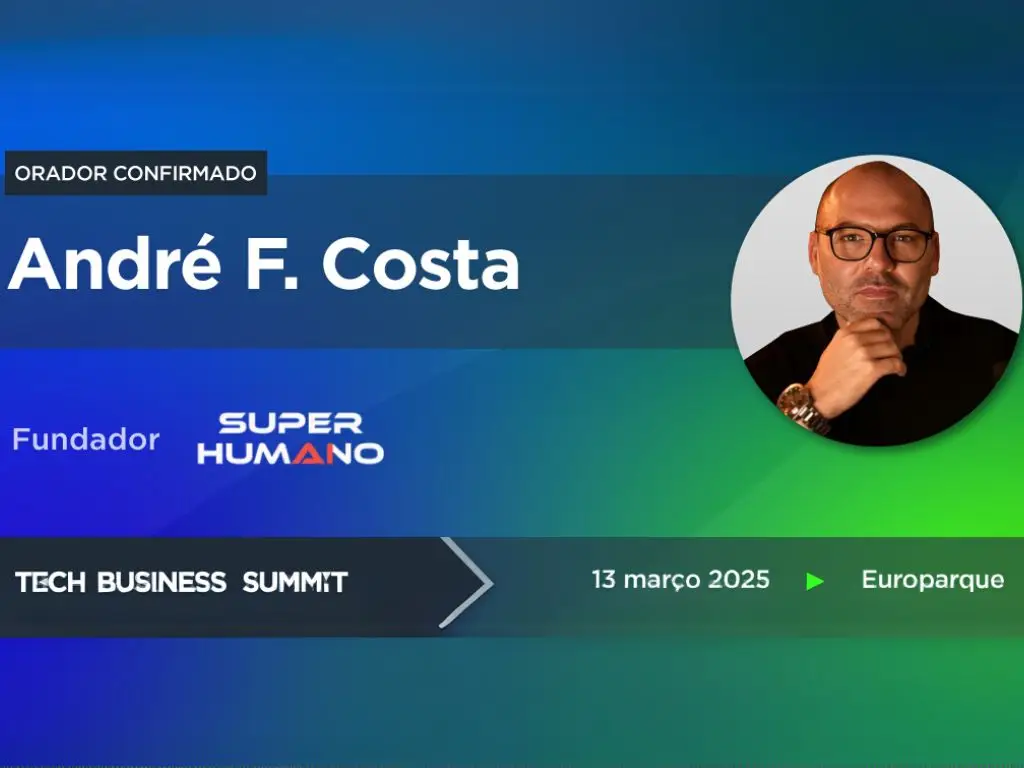
Artificial Intelligence is no longer a distant possibility for small and medium-sized enterprises. There are concrete tasks that an SME can improve now, with accessible tools and without starting with a large technology project.
This is the idea I will take to Tech Business Summit 2025 at Europarque: before choosing technology, a company should identify where it loses time, information or opportunities and test a small application with measurable impact.
Seven ways to use AI in an SME
1. Prepare communications
AI can create a first draft of emails, proposals, frequently asked questions and internal messages. The team remains responsible for checking facts, adjusting the tone and approving the message.
2. Summarise and organise documents
Reports, minutes and lengthy documentation can become summaries, decision lists or action points. The gain is not only the summary: it is making information easier to find and use.
3. Support meetings
An assistant can help build an agenda, anticipate questions, organise notes and prepare follow-up. It must never invent decisions or replace validation by those who attended.
4. Improve customer service
Repeated questions can be answered faster when AI works from company-approved information. Sensitive cases, exceptions and complaints should continue to involve a person.
5. Support sales
AI can help prepare for a sales meeting, summarise the history of an opportunity, personalise a proposal or identify the next step. This only works when customer data is organised.
6. Analyse data
A team can use AI to explore a spreadsheet, formulate hypotheses and explain patterns. Relevant calculations and conclusions must be checked before they support a decision.
7. Automate repetitive work
Copying information between systems, classifying requests and generating notifications are good automation candidates. Start with frequent, predictable and reversible processes.
How to choose the first use case
List common tasks and score each one from 1 to 5 against four criteria:
- frequency;
- time consumed;
- predictability;
- risk of error.
A good first experiment is frequent, takes time, follows reasonably clear rules and carries low risk. Avoid beginning with a strategic, legal or people-related decision that is hard to reverse.
A 30-day test plan
- Define the problem: describe the current task and the result you want to improve.
- Record a baseline: how long does it take, how many errors occur and who is involved?
- Choose a small group: test with people who know the process well.
- Set rules: which data can enter, who reviews and when should work be escalated?
- Compare results: measure time, quality, adoption and incidents.
- Decide: improve, expand or stop the use case.
A test that shows that a solution is not worthwhile still produces useful knowledge. The goal is not to prove that AI works everywhere, but to find where it creates real capacity.
To explore the possible cases without accumulating unnecessary applications, read the seven ways to apply AI in an SME.
The role of leadership
Leaders do not need to master every tool. They need to make sure that adoption has priorities, rules, owners and measures. Delegating experimentation without direction creates scattered accounts, exposed data and results that cannot be compared.
Before investing, a company can assess its starting point with the SuperHumano Academy AI Maturity Index. To explore implementation paths, visit the Company of the Future area and AI Solutions for businesses.
Frequently asked questions
Does an SME need to hire an AI team?
Not to begin. It needs an owner for the test, people who understand the process and specialist support when integrations, security or organisational change justify it.
What is the best AI tool for an SME?
There is no universal answer. The right tool depends on the task, data, required integrations, terms of use and total cost.
How should return be measured?
Compare the process before and after: time per task, errors, response speed, opportunities created and people's satisfaction. Include licensing, configuration, review and training costs.
Context note: this article was published before Tech Business Summit on 13 March 2025 at Europarque in Santa Maria da Feira. The event has ended; the article was revised to preserve the practical lessons from the session.